

Introduction
A pet feeding schedule is one of the most important parts of responsible pet care. Many pet owners focus on food quality but forget that timing and consistency matter just as much. Feeding your pet at the right time, in the right amount, and with a clear routine can improve digestion, energy levels, and overall health. Whether you have a dog, cat, or another small pet, a proper feeding routine helps them feel safe and balanced every day.
For beginners, feeding pets may seem simple. You put food in a bowl, and your pet eats. However, without a structured plan, pets can develop unhealthy habits such as overeating, begging, or skipping meals. Intermediate pet owners often realize that irregular feeding times can cause weight problems, stomach issues, and even behavior changes. That is where a well-planned pet feeding schedule makes a real difference.
A consistent routine also helps owners manage their day better. You know when to feed your pet, how much to serve, and when to expect bathroom breaks. Over time, pets learn the routine and feel more relaxed because they know what to expect. This reduces stress for both pets and owners.
In this complete guide, you will learn what a pet feeding schedule is, why it matters, and how to create one step by step. You will also discover common mistakes, expert tips, and answers to frequently asked questions. By the end, you will have the confidence to build a feeding routine that supports long-term health and happiness for your pet.
What is a Pet Feeding Schedule?
A pet feeding schedule is a planned routine that defines when, how often, and how much you feed your pet each day. It is not just about food choice but also about timing and consistency. This schedule helps regulate your pet’s digestion, metabolism, and daily behavior.
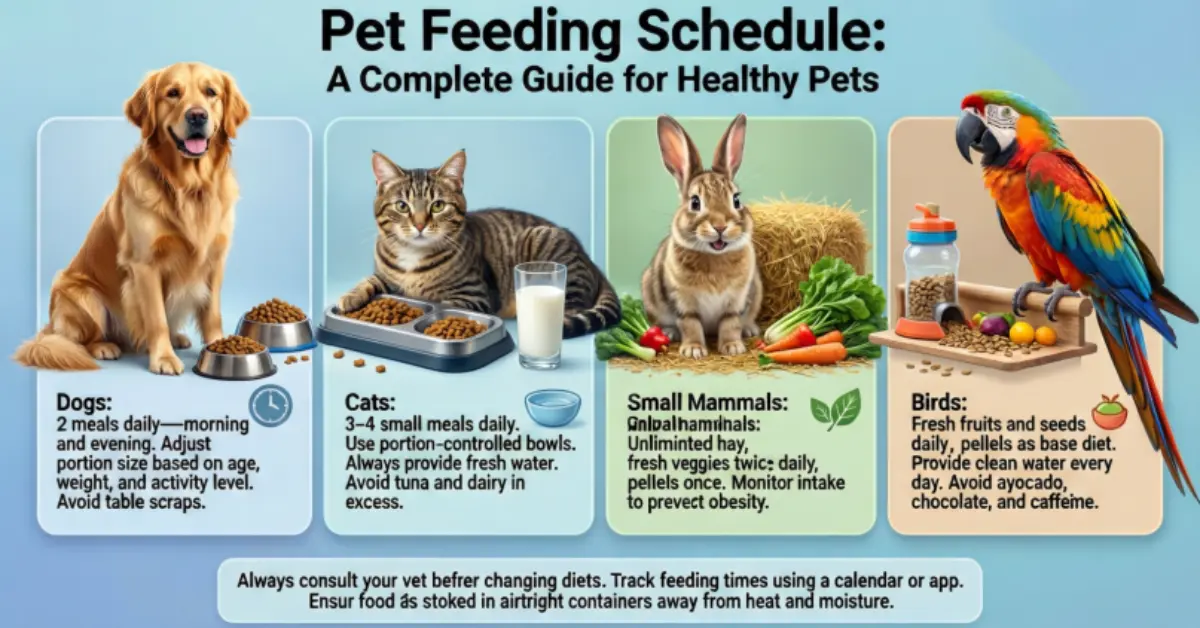
Most schedules include set meal times, portion sizes, and guidelines for treats. For example, a dog may eat twice a day, once in the morning and once in the evening. A cat may prefer smaller meals spread throughout the day. Each pet is different, so the schedule should match their age, size, breed, and health condition.
A proper pet feeding schedule also considers water intake and feeding environment. Feeding in a quiet, clean area at the same times daily helps pets feel secure. Over time, pets adjust their internal clock to the routine, which supports better appetite control and digestion.
Why is a Pet Feeding Schedule Important?
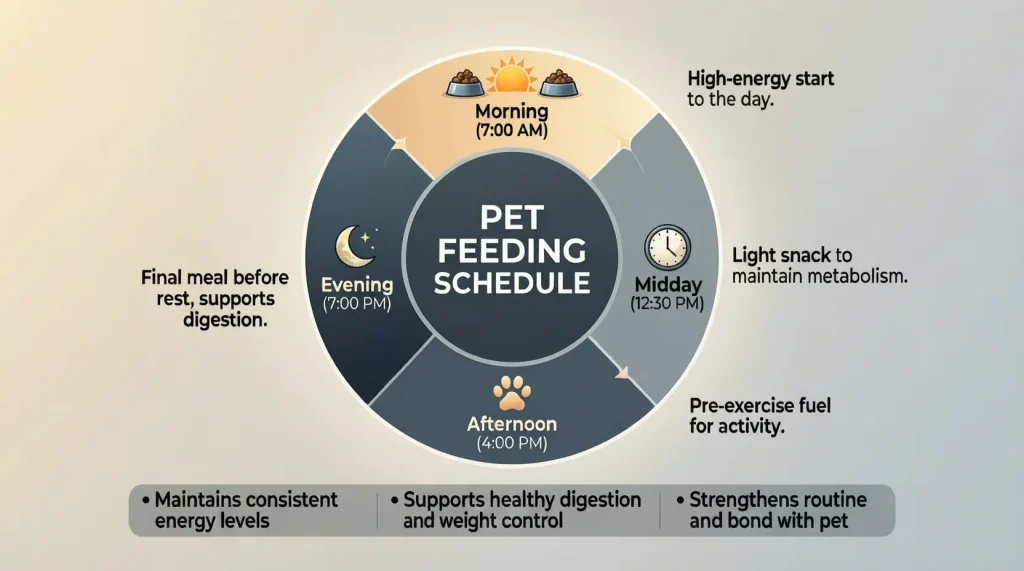
A pet feeding schedule plays a key role in your pet’s physical and mental well-being. Pets thrive on routine, and feeding time is a major part of their daily life. When meals are predictable, pets feel calmer and more secure.
Regular feeding times help maintain a healthy weight. Overfeeding or random feeding can lead to obesity or malnutrition. A schedule allows you to control portions and monitor eating habits. This makes it easier to notice changes in appetite that may signal health issues.
Digestive health also improves with routine feeding. Pets fed at consistent times experience fewer stomach problems, such as vomiting or bloating. In addition, a pet feeding schedule supports better training and behavior. Pets are less likely to beg or steal food when they know meals are coming at set times.
Detailed Step-by-Step Guide
Step 1: Understand Your Pet’s Needs
Every pet has unique nutritional needs. Age, breed, size, and activity level all influence how often and how much your pet should eat. Puppies and kittens usually need more frequent meals, while adult pets do well with fewer meals.
Senior pets may require special diets and adjusted schedules. Pets with medical conditions may also need customized feeding times. Understanding these factors is the foundation of a good pet feeding schedule.
Step 2: Choose the Right Number of Meals
Decide how many meals your pet needs per day. Most dogs eat two meals daily. Cats often prefer two to four smaller meals. Small pets like rabbits or guinea pigs may need constant access to hay with scheduled pellet feeding.
Avoid free-feeding unless advised by a veterinarian. Scheduled meals help prevent overeating and make it easier to track food intake.
Step 3: Set Fixed Feeding Times
Consistency is key. Choose times that fit your daily routine and stick to them. For example, feeding your dog at 7 a.m. and 6 p.m. every day creates a strong habit.
Try to keep feeding times within a 30-minute window. This helps your pet’s body adjust and reduces stress. A consistent pet feeding schedule also helps with bathroom training and sleep routines.
Step 4: Measure Portions Carefully
Use a measuring cup or scale to serve accurate portions. Guessing often leads to overfeeding. Follow feeding guidelines on pet food packaging, but adjust based on your pet’s activity level and body condition.
Treats should be included in the daily calorie count. Too many treats can disrupt the balance of a pet feeding schedule and cause weight gain.
Step 5: Create a Calm Feeding Environment
Feed your pet in a quiet area away from distractions. This helps them focus on eating and reduces anxiety. For homes with multiple pets, separate feeding areas may prevent competition and stress.
Remove uneaten food after 20 to 30 minutes. This reinforces the routine and prevents grazing throughout the day.
Step 6: Monitor and Adjust
Observe your pet’s weight, energy, and stool quality. These signs tell you if the pet feeding schedule is working. If your pet gains or loses weight, adjust portions or meal frequency.
Regular checkups help ensure your schedule matches your pet’s changing needs. Flexibility is important, but changes should be gradual.
Benefits of a Pet Feeding Schedule
- Supports healthy digestion and nutrient absorption
- Helps maintain a healthy body weight
- Reduces begging and food-related behavior issues
- Makes it easier to monitor appetite changes
- Improves training and daily routine
- Creates a sense of security and stability
- Saves time and reduces feeding confusion
Disadvantages / Risks
- Requires commitment and consistency
- Less flexible for owners with irregular schedules
- May need adjustments during travel or illness
- Incorrect portions can still cause problems
- Multiple pets may need separate schedules
Common Mistakes to Avoid
Many pet owners make simple mistakes when creating a pet feeding schedule. One common error is feeding based on emotions rather than need. Giving extra food because your pet looks hungry can lead to overeating.
Another mistake is ignoring treats. Treats count as calories and should be limited. Feeding at random times is also harmful, as it confuses your pet and disrupts digestion.
Sudden changes in food or schedule can upset your pet’s stomach. Always make adjustments slowly. Finally, failing to monitor weight and health can allow small problems to grow into serious issues.
FAQs
How many times a day should I feed my pet?
Most adult dogs do well with two meals a day. Cats often prefer smaller, more frequent meals. Puppies and kittens need more frequent feeding. The best pet feeding schedule depends on age, size, and health.
Can I change my pet’s feeding schedule?
Yes, but changes should be gradual. Shift feeding times slowly over several days to avoid digestive upset and stress.
Is free-feeding a good idea?
Free-feeding works for some pets but often leads to overeating. A structured pet feeding schedule is usually healthier and easier to manage.
What if my pet refuses to eat at scheduled times?
Remove the food after a set period and offer it again at the next scheduled meal. Most pets adjust quickly once they learn the routine.
Should treats be given at set times?
Yes, treats should be limited and preferably given during training or after meals. This keeps the pet feeding schedule balanced.
How do I manage feeding with multiple pets?
Feed pets separately if possible. This prevents competition and ensures each pet gets the correct portion.
Expert Tips & Bonus Points
Use alarms or reminders to stay consistent. Choose high-quality food that suits your pet’s life stage. Keep fresh water available at all times. Track feeding habits in a notebook or app to spot changes early.
If your schedule is busy, automatic feeders can help maintain consistency. During travel, keep feeding times as close to normal as possible. Always consult a professional if your pet has special dietary needs.
Conclusion
A well-planned pet feeding schedule is a simple yet powerful tool for improving your pet’s health and happiness. By feeding your pet at consistent times and in proper portions, you support better digestion, balanced energy, and stable behavior. Pets feel safer and more relaxed when they know what to expect each day.
For beginners, creating a routine may take some effort, but the benefits are worth it. Intermediate pet owners can refine their approach by monitoring changes and adjusting as needed. Remember that no single schedule fits all pets. Each animal has unique needs that change with age, activity, and health.
