

Introduction
Keeping a pet healthy is a long-term commitment that starts with proper medical care. One of the most important parts of that care is following the right pet vaccination schedule. Vaccines protect pets from dangerous diseases that can spread quickly and sometimes become life threatening. Many new pet owners feel confused about which vaccines are needed, when they should be given, and how often boosters are required. This confusion can lead to missed doses or unnecessary delays that put pets at risk.
A clear pet vaccination schedule helps pet owners plan ahead and make better health decisions. It creates a strong foundation for a pet’s immune system and supports a longer, happier life. Whether you have a playful puppy, a curious kitten, or an adult rescue pet, understanding vaccination timing is essential. Vaccines are not just for young pets. Adult pets also need regular boosters to stay protected.
In this guide, you will learn what a vaccination schedule really means, why it matters, and how to follow it step by step. The information is written in simple English, making it easy for beginners and useful for intermediate readers as well. By the end, you will feel confident about protecting your pet’s health in a safe and responsible way.
What is Pet Vaccination Schedule?
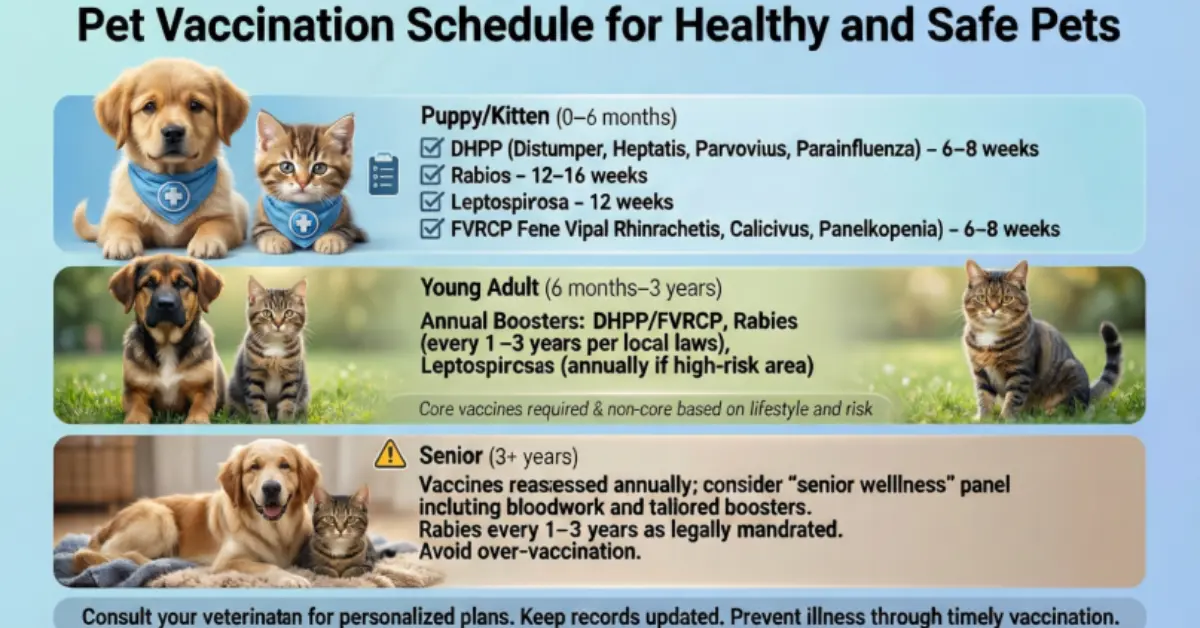
A pet vaccination schedule is a planned timeline that shows when a pet should receive specific vaccines. It usually starts when pets are very young and continues throughout their lives. The schedule is designed by veterinarians based on a pet’s age, species, lifestyle, and health condition.
Vaccines work by helping the immune system recognize and fight harmful viruses or bacteria. When given at the right time, they offer strong protection without overwhelming the body. A proper schedule spaces vaccines in a way that builds immunity safely and effectively.
For example, puppies and kittens receive a series of vaccines in their early months. Adult pets then receive booster shots at regular intervals. The exact timing can vary, but the goal is always the same. It is to prevent disease before it starts.
Why is Pet Vaccination Schedule Important?
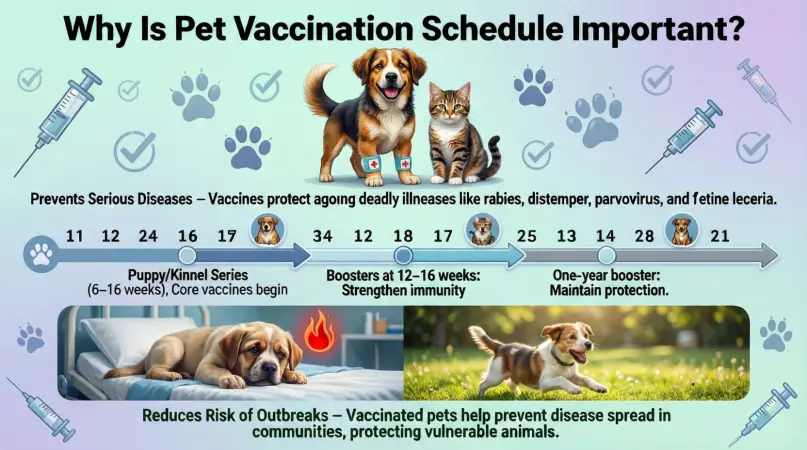
Following a vaccination schedule is important for many reasons. First, it protects pets from serious illnesses that are difficult or expensive to treat. Diseases like rabies, distemper, and parvovirus can be fatal without prevention.
Second, vaccinations protect other animals and humans. Some pet diseases can spread to people, especially children and older adults. By vaccinating your pet, you reduce this risk and support public health.
Third, many boarding facilities, groomers, and training centers require proof of vaccination. A complete schedule makes travel and social activities easier.
Detailed Step-by-Step Guide
Step 1: Early Life Vaccinations
Young pets are the most vulnerable to infections. Puppies and kittens usually start vaccinations at six to eight weeks of age. These early vaccines protect against common and dangerous diseases.
The first set is often followed by additional doses every three to four weeks. This process helps strengthen the immune response as the pet grows.
Step 2: Core Vaccines
Core vaccines are essential for all pets, regardless of lifestyle. For dogs, these often include protection against rabies, distemper, and parvovirus. For cats, core vaccines usually cover rabies and feline viral diseases.
These vaccines form the backbone of any pet vaccination schedule and should never be skipped without medical advice.
Step 3: Non Core Vaccines
Non core vaccines depend on a pet’s environment and habits. Pets that spend time outdoors or interact with many animals may need extra protection.
Your veterinarian will assess risks and suggest additional vaccines if needed. This personalized approach ensures safety without over vaccination.
Step 4: Booster Shots
Vaccines do not last forever. Booster shots remind the immune system how to fight specific diseases. Some boosters are given yearly, while others last longer.
Skipping boosters can reduce immunity and leave pets exposed. Keeping reminders or records helps maintain consistency.
Step 5: Adult and Senior Pet Care
As pets age, their immune systems may weaken. Regular health checks combined with timely boosters are especially important during adulthood and senior years.
Older pets may also need adjusted schedules based on health conditions. A veterinarian can help create a plan that balances protection and comfort.
Benefits of Pet Vaccination Schedule
- Protects pets from life threatening diseases
- Reduces the spread of infections among animals
- Supports public health and safety
- Lowers long term medical costs
- Allows easier travel and boarding
- Increases pet lifespan and quality of life
Disadvantages / Risks
- Mild side effects like swelling or tiredness
- Rare allergic reactions
- Temporary discomfort at injection site
- Cost concerns for some owners
Common Mistakes to Avoid
Many pet owners delay vaccines due to fear or misinformation. Waiting too long can leave pets unprotected during critical periods.
Another common mistake is skipping boosters. Even if a pet seems healthy, immunity can fade over time.
Some owners also ignore professional advice and follow online trends. Every pet is different, and veterinary guidance is essential.
FAQs
How early should vaccinations start?
Most pets begin vaccinations between six and eight weeks of age. Early protection is important because young immune systems are still developing.
Are vaccines safe for all pets?
Vaccines are generally safe and tested. However, pets with certain health issues may need special care, which a veterinarian can provide.
Do indoor pets need vaccines?
Yes, indoor pets can still be exposed to diseases through humans or other animals. Core vaccines are still recommended.
How long do vaccines last?
Some vaccines last one year, while others last longer. Booster timing depends on the specific vaccine used.
Can vaccines cause illness?
Mild reactions are possible, but serious issues are rare. The benefits usually outweigh the risks.
What if I miss a scheduled vaccine?
Contact your veterinarian. They can adjust the schedule and ensure continued protection without restarting everything.
Expert Tips & Bonus Points
Keep a vaccination record in a safe place. This helps track dates and avoid missed doses.
Schedule vaccines during calm periods. Avoid times when pets are already stressed or sick.
Ask about combination vaccines. They reduce the number of injections and visits.
Always observe your pet after vaccination and report unusual reactions quickly.
Conclusion
Following a proper pet vaccination schedule is one of the most responsible actions a pet owner can take. It is not just about preventing illness. It is about building a strong foundation for a healthy and happy life. Vaccinations protect pets, families, and communities from avoidable diseases.
By understanding the timing, purpose, and benefits of each vaccine, pet owners can make informed decisions with confidence. Regular checkups, clear records, and professional guidance make the process simple and effective. Even though mild risks exist, they are small compared to the protection vaccines provide.
