

Introduction
Bringing a pet into your life is a joyful experience, but it also comes with responsibility. Your home may feel safe to you, yet it can be full of hidden dangers for animals. That is why learning how to pet-proof your house is so important. Many common household items, furniture pieces, and daily habits can put pets at risk without you even realizing it. From exposed wires to toxic plants, small details can quickly turn into serious problems.
Pet-proof your house means creating a living space where your pet can explore, play, and rest without constant danger. It is not about removing comfort or style from your home. Instead, it is about making smart changes that protect your pet while keeping your home functional. Whether you have a playful puppy, a curious kitten, or an older pet, safety should always come first.
Many new pet owners feel overwhelmed by the idea of home safety. However, with the right guidance, the process becomes simple and manageable. You do not need expensive tools or professional help in most cases. Small adjustments can make a big difference over time.
What Is Pet-Proof Your House?
Pet-proof your house means preparing your home environment to reduce risks and prevent accidents involving pets. It focuses on identifying hazards and making changes that protect animals from injury, poisoning, or stress. This process applies to all types of pets, including dogs, cats, and small animals.
When you pet-proof your house, you look at your space from a pet’s point of view. Pets explore with their mouths, paws, and noses. They chew, scratch, climb, and squeeze into tight places. Items that seem harmless to humans may be dangerous to animals.
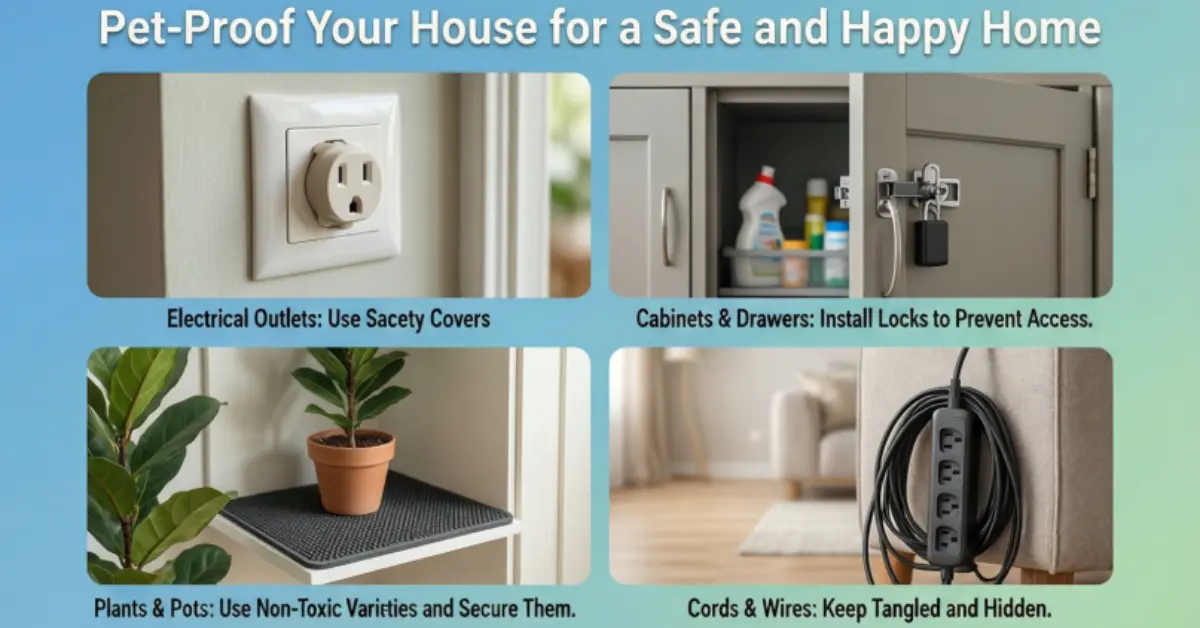
Pet-proofing includes securing furniture, storing chemicals safely, covering electrical cords, and blocking unsafe areas. It also involves choosing pet-safe plants, organizing small objects, and setting clear boundaries indoors.
The goal is not to control your pet’s behavior completely. Instead, it is to create a safe setting where training and supervision work better. A pet-proofed home gives pets freedom without constant risk.
Why Is Pet-Proof Your House Important?
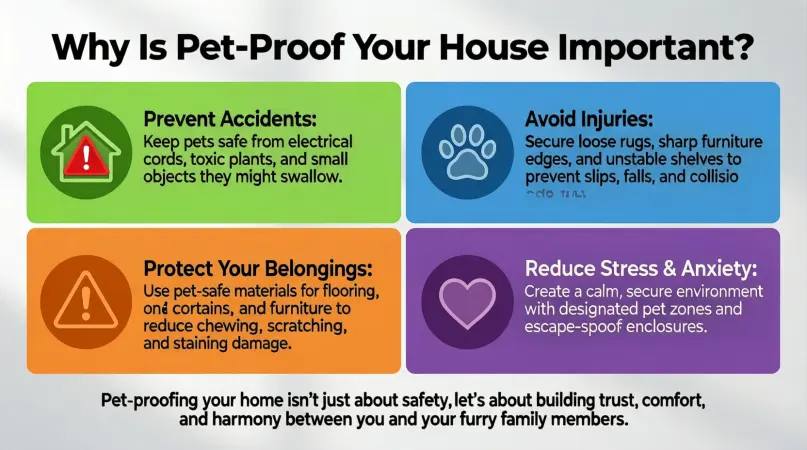
Pet-proof your house is important because accidents can happen quickly. Pets do not understand danger the way humans do. A single mistake can lead to injury, illness, or costly vet visits.
A safe home protects your pet’s physical health. It reduces the chance of choking, burns, falls, or poisoning. It also supports mental well-being. Pets feel calmer when they can move freely without being scolded all the time.
Pet-proofing also protects your belongings. Chewed wires, scratched furniture, and broken items are common problems in unsafe homes. When your house is prepared, destructive behavior often decreases.
Another key reason is peace of mind. Knowing your home is safe allows you to relax, even when you are not watching your pet closely. In the long run, pet-proof your house practices save time, money, and emotional stress.
Detailed Step-by-Step Guide
Step 1: Secure Electrical and Cords
Electrical cords are one of the biggest dangers for pets. Chewing can cause shocks or burns.
Start by hiding loose wires behind furniture. Use cord covers or protective tubing. Keep chargers unplugged when not in use. Avoid dangling cords that invite play.
Step 2: Store Chemicals and Medications Safely
Cleaning products, pesticides, and medicines should always be out of reach.
Place them in locked cabinets or high shelves. Use childproof latches if needed. Never leave products open on the floor, even for a short time.
Step 3: Remove Toxic Plants
Many indoor and outdoor plants are harmful to pets.
Check which plants you have and remove toxic ones. Replace them with pet-safe options. This simple step can prevent serious health issues.
Step 4: Protect Furniture and Sharp Edges
Sharp corners and unstable furniture can cause injuries.
Use corner guards on tables. Secure tall furniture to the wall. Avoid lightweight items that tip over easily when climbed.
Step 5: Manage Small Objects and Trash
Small items are choking hazards.
Keep floors clear of coins, toys, and buttons. Use trash cans with secure lids. Empty bins regularly to avoid smells that attract pets.
Step 6: Block Unsafe Areas
Some spaces should be off-limits.
Use baby gates to block stairs or kitchens. Close doors to storage rooms. Cover vents and small openings where pets could get stuck.
Step 7: Create a Pet-Friendly Zone
Give your pet a safe space of their own.
Set up a comfortable bed, toys, and water bowl. This area helps pets feel secure and reduces roaming in risky areas.
Benefits of Pet-Proof Your House
- Reduces risk of injuries and accidents
- Prevents poisoning and choking hazards
- Protects furniture and household items
- Supports better pet behavior
- Creates a calm and stress-free environment
- Saves money on vet bills
- Gives owners peace of mind
Disadvantages / Risks
- Takes time and planning
- May require small expenses
- Needs regular updates as pets grow
- Some pets may resist changes
Common Mistakes to Avoid
Many pet owners underestimate risks.
Avoid assuming your pet knows what is dangerous. Do not leave items out “just for a moment.” Skipping regular checks is another mistake. Pets change habits as they grow.
Also, avoid using unsafe materials when pet-proofing. Always choose pet-safe products.
FAQs
How often should I pet-proof my house?
Pet-proof your house should be reviewed every few months. Changes in pet age or behavior may require updates.
Is pet-proofing expensive?
Most steps are affordable. Many solutions use items you already have at home.
Do older pets need pet-proofing?
Yes, older pets may have mobility issues and need extra safety measures.
Can I pet-proof a small apartment?
Absolutely. Small spaces can be made very safe with simple organization.
Does pet-proofing replace training?
No, it works best with training and supervision.
What is the biggest danger at home?
Electrical cords and toxic substances are among the most common risks.
Expert Tips & Bonus Points
Always observe your pet’s behavior closely. Pets show you where risks exist. Rotate toys to keep interest high. Clean regularly to spot hazards early. Keep emergency numbers handy.
Consistency matters. Make pet-proof your house a habit, not a one-time task.
Conclusion
Learning how to pet-proof your house is one of the best gifts you can give your pet. A safe home allows pets to live freely while reducing constant worry for owners. The process does not need to be stressful or expensive. With small, thoughtful changes, you can greatly lower the risk of accidents and injuries.
Pet-proofing is not a one-time job. It grows with your pet and adapts to new situations. As pets age, their needs change, and your home should change with them. Regular checks help maintain safety and comfort.
When you pet-proof your house, you also build trust with your pet. They feel secure in an environment designed for their well-being. This trust strengthens your bond and improves daily life together.
