

Introduction
Emergency care for pets is something every pet owner should understand, even if they hope they never need it. Accidents, sudden illnesses, and unexpected injuries can happen at any time. When they do, quick and calm action can save a pet’s life. Many pet owners panic during emergencies because they do not know what to do or where to start. This confusion often leads to delays, which can make a situation worse.
Learning emergency care for pets does not mean replacing a veterinarian. Instead, it means knowing how to respond during the first critical minutes before professional help is available. Simple actions like stopping bleeding, recognizing signs of distress, or keeping your pet stable can make a huge difference. Emergency care for pets is about preparedness, awareness, and confidence.
Pets cannot tell us what they are feeling. They show pain and fear through behavior changes, posture, and sounds. Understanding these signs allows owners to act faster and more effectively. Emergency care for pets also helps reduce panic, which keeps both the pet and the owner safer.
This guide is written in simple English for beginners and intermediate readers. It explains what emergency care for pets is, why it matters, and how to apply it step by step. By the end, you will feel more confident handling emergencies and protecting your pet’s health when it matters most.
What Is Emergency Care for Pets?
Emergency care for pets refers to the immediate actions taken when a pet is injured, suddenly ill, or in danger. These actions are performed before or while seeking professional veterinary help. The goal is to stabilize the pet, reduce pain, and prevent the condition from getting worse.
Emergency care for pets includes recognizing urgent symptoms, providing first aid, and safely transporting the animal. Examples include treating wounds, responding to choking, handling poisoning, or managing heatstroke. It also involves knowing when a situation is serious enough to require urgent veterinary attention.
This type of care applies to all pets, including dogs, cats, birds, and small animals. While techniques may differ by species, the basic principles remain the same. Emergency care for pets focuses on quick thinking, gentle handling, and safety for both the pet and the owner.
Why Is Emergency Care for Pets Important?
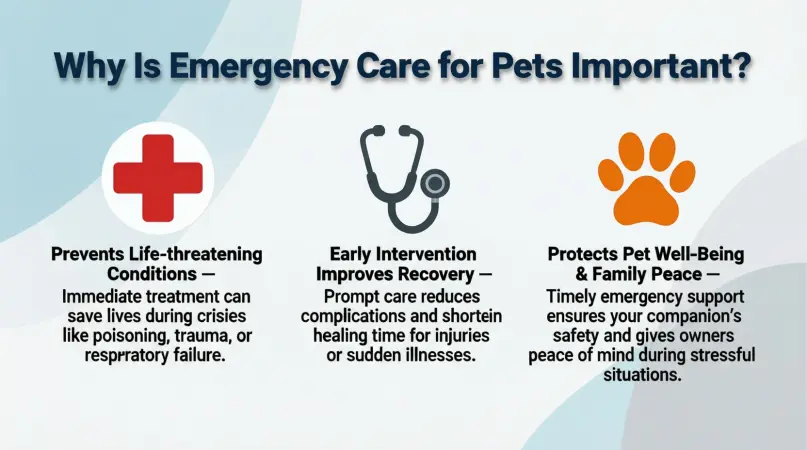
Emergency care for pets is important because emergencies often happen without warning. A pet can be healthy one moment and in serious trouble the next. Knowing how to respond can save valuable time and even save a life.
Quick action can prevent complications. For example, stopping bleeding early can prevent shock. Cooling a pet with heatstroke can prevent organ damage. Emergency care for pets helps control the situation until professional care is available.
It also reduces stress for the pet. Calm and informed actions help keep pets stable and less fearful. Owners who understand emergency care for pets feel more confident and less helpless during critical moments.
Most importantly, emergency care for pets strengthens the bond between owners and their animals. It shows responsibility, care, and commitment to their well-being.
Detailed Step-by-Step Guide
Step 1: Stay Calm and Assess the Situation
The first step in emergency care for pets is staying calm. Panic can lead to mistakes and unsafe actions. Take a deep breath and observe your pet carefully.
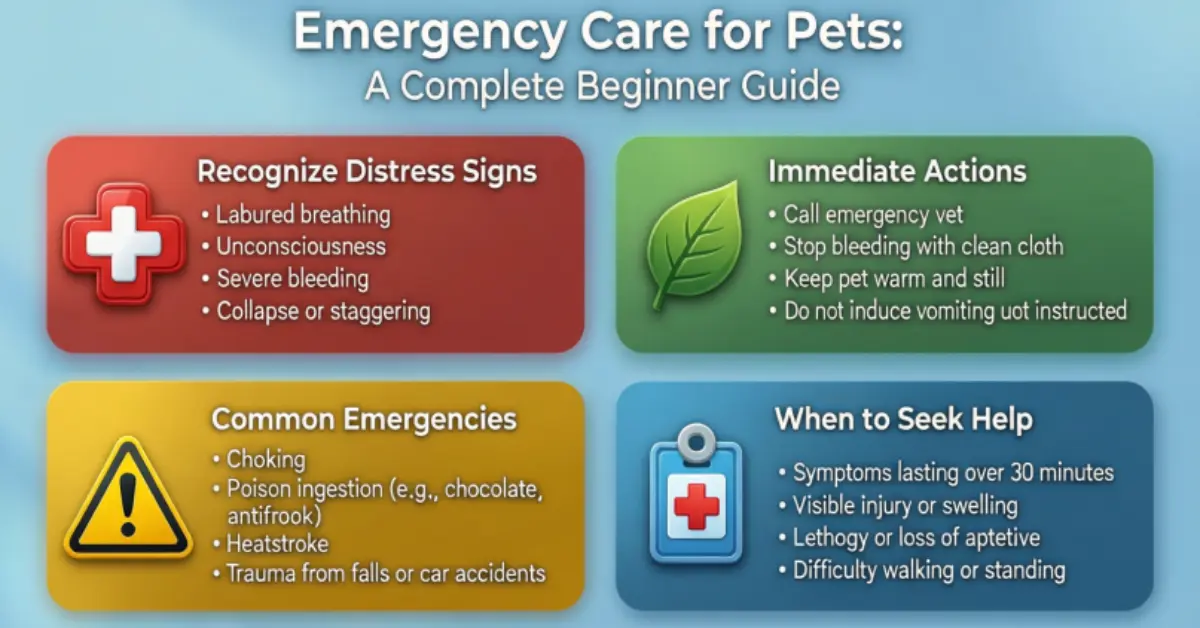
Look for signs such as bleeding, difficulty breathing, unconsciousness, or severe pain. Check your surroundings for dangers like traffic, fire, or sharp objects. Make sure both you and your pet are safe before moving forward.
Step 2: Approach Your Pet Safely
In emergencies, even gentle pets may bite or scratch due to pain or fear. Speak softly and move slowly. If needed, use a towel or blanket to protect yourself.
Emergency care for pets always starts with safety. Avoid sudden movements and never put your face close to a pet’s mouth if they are in pain.
Step 3: Check Breathing and Heartbeat
Breathing and heartbeat are vital signs. Watch your pet’s chest to see if it is moving. Listen for breathing sounds. If breathing is difficult or stopped, this is a serious emergency.
Place your hand on the chest to feel for a heartbeat. If you cannot detect one, immediate action is required. Emergency care for pets includes basic life-saving awareness, even if full CPR is not possible.
Step 4: Control Bleeding
Bleeding can be life-threatening. Apply gentle pressure using a clean cloth or bandage. Keep pressure steady for several minutes.
Do not remove objects stuck in a wound. This can cause more bleeding. Emergency care for pets focuses on controlling damage until a veterinarian can treat the injury properly.
Step 5: Handle Common Emergencies
Choking
If your pet is choking, look inside the mouth only if it is safe. Remove visible objects carefully. If you cannot remove it, seek immediate help.
Poisoning
Do not induce vomiting unless instructed by a professional. Remove the poison source and keep the packaging if possible.
Heatstroke
Move the pet to a cool area. Offer small amounts of water and use cool, not cold, towels.
Emergency care for pets varies by situation, but quick response is always key.
Step 6: Transport Your Pet Safely
Once the pet is stable, transport them to a veterinary clinic. Use a carrier, box, or blanket as a stretcher if needed.
Keep your pet warm and calm during transport. Emergency care for pets includes safe handling to avoid worsening injuries.
Benefits of Emergency Care for Pets
- Helps save your pet’s life during critical moments
- Reduces the severity of injuries and illnesses
- Prevents complications and long-term damage
- Builds owner confidence during emergencies
- Strengthens the bond between pets and owners
- Improves overall pet safety and well-being
Disadvantages / Risks
- Incorrect actions may worsen the condition
- Lack of training can lead to mistakes
- Some emergencies require professional care only
- Stressful situations may affect judgment
- Delayed veterinary care can still occur
Understanding these risks highlights the importance of learning proper emergency care for pets.
Common Mistakes to Avoid
One common mistake is panicking. Panic leads to rushed decisions and unsafe handling. Another mistake is delaying professional help. Emergency care for pets is not a replacement for veterinary treatment.
Using human medications is also dangerous. Many are toxic to pets. Ignoring small symptoms can be harmful, as minor signs may indicate serious issues.
Finally, not preparing in advance is a major mistake. Emergency care for pets requires readiness, not last-minute learning.
FAQs
What situations require emergency care for pets?
Situations include severe injuries, difficulty breathing, poisoning, seizures, heatstroke, and sudden collapse. Any rapid change in behavior or health may require emergency care for pets.
Can emergency care for pets replace a veterinarian?
No. Emergency care for pets is only for immediate response. Professional veterinary care is always necessary for proper diagnosis and treatment.
Should I keep a pet first aid kit?
Yes. A basic kit with bandages, gloves, and towels supports emergency care for pets and helps you respond faster.
How can I tell if my pet is in pain?
Signs include whining, hiding, aggression, limping, or changes in appetite. These signals are important in emergency care for pets.
Is emergency care for pets the same for all animals?
Basic principles are similar, but techniques vary by species. Always consider your pet’s size and type.
How can I prepare for pet emergencies?
Learn basic first aid, know your vet’s contact details, and stay informed. Preparation improves emergency care for pets outcomes.
Expert Tips & Bonus Points
Keep emergency numbers visible at home. Practice handling your pet gently to reduce fear during emergencies. Regular checkups help identify risks early.
Learn your pet’s normal behavior. This makes it easier to notice problems quickly. Emergency care for pets becomes more effective when owners know their pets well.
Consider training courses if available. Knowledge builds confidence and improves response during real emergencies.
Conclusion
Emergency care for pets is an essential skill for every responsible pet owner. Emergencies are unpredictable, and when they happen, the first few minutes matter the most. Knowing how to stay calm, assess the situation, and take quick action can save your pet’s life.
This guide has explained emergency care for pets in a simple and practical way. From understanding what it means to following step-by-step actions, each section focuses on helping you feel prepared. Emergency care for pets is not about perfection. It is about doing the best you can until professional help is available.
Preparation is the key to success. Learn the basics, avoid common mistakes, and keep emergency supplies ready. Pay attention to your pet’s behavior and health, as early signs often prevent serious emergencies.
