

Introduction
Correcting bad pet habits is one of the most common challenges faced by pet owners today. From excessive barking and chewing to scratching furniture or ignoring commands, these behaviors can be stressful and confusing. Many people feel frustrated because they love their pets but do not know how to guide them in the right way. The good news is that most bad habits are not signs of a bad pet. Instead, they are usually the result of misunderstanding, lack of training, boredom, fear, or inconsistent rules at home.
Correcting bad pet habits takes time, patience, and the right approach. It is not about punishment or anger. It is about teaching pets what is acceptable while building trust and confidence. When done correctly, habit correction improves communication between pets and owners. It also creates a peaceful home where everyone feels safe and happy.
This guide is written for beginners and intermediate pet owners who want clear and practical advice. You will learn what bad pet habits are, why correcting them matters, and how to fix them step by step. The focus is on simple methods that work for dogs, cats, and other common pets. By the end, you will feel more confident about guiding your pet toward better behavior using kind, effective, and proven techniques.
What is Correcting Bad Pet Habits?
Correcting bad pet habits means identifying unwanted behaviors and guiding your pet toward better actions. These habits can include chewing shoes, biting, jumping on guests, excessive meowing, digging, or ignoring basic commands. In simple words, it is the process of teaching pets what to do instead of what not to do.
Bad habits often develop because pets do not understand human expectations. Sometimes they are bored, anxious, scared, or simply untrained. Correcting bad pet habits focuses on understanding the cause behind the behavior. Once the cause is clear, owners can use training, routine, and positive reinforcement to change it.
This process is not instant. Pets learn through repetition and consistency. Correcting habits means replacing a negative behavior with a positive one over time. It is a learning journey for both the pet and the owner.
Why is Correcting Bad Pet Habits Important?
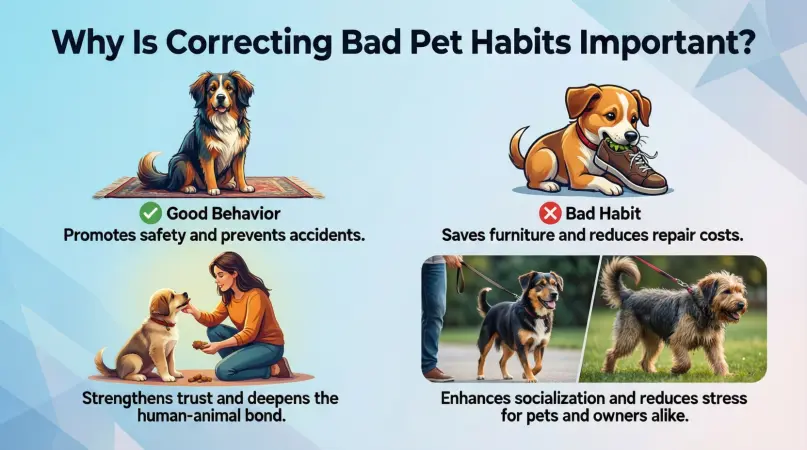
Correcting bad pet habits is important for many reasons. First, it helps keep pets safe. For example, chewing wires or aggressive behavior can lead to serious injuries. Second, it protects your home and belongings from damage.
More importantly, correcting bad pet habits improves the emotional health of pets. When pets understand boundaries, they feel more secure and relaxed. Clear rules reduce confusion and anxiety. This leads to better behavior naturally.
It also strengthens the bond between pets and owners. Training builds trust and communication. Pets feel understood, and owners feel more confident. In the long run, correcting bad pet habits creates a happier, calmer, and more balanced life for everyone in the household.
Detailed Step-by-Step Guide
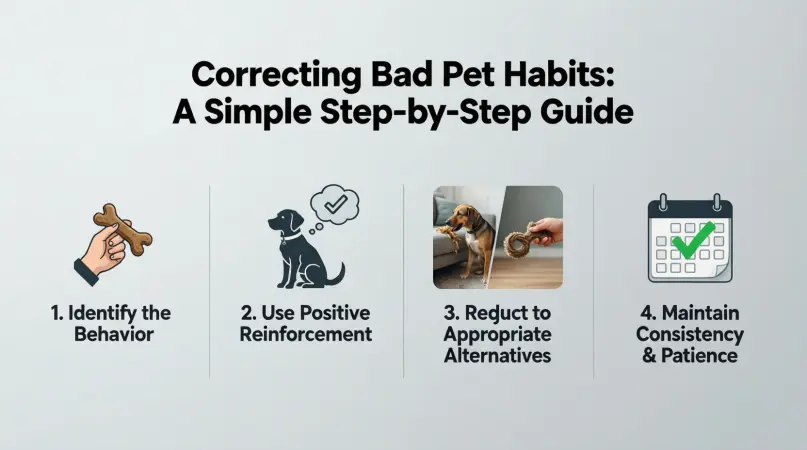
Step 1: Identify the Habit Clearly
Before correcting any behavior, you must clearly identify the habit. Observe when and where it happens. Note triggers, timing, and frequency.
For example:
- Does your dog bark only when alone?
- Does your cat scratch furniture after meals?
Clear observation helps you understand the real issue.
Step 2: Understand the Root Cause
Every bad habit has a reason. Common causes include boredom, fear, lack of exercise, or poor training. Correcting bad pet habits without understanding the cause often fails.
Ask yourself:
- Is my pet getting enough physical activity?
- Is there a recent change at home?
Once the cause is clear, solutions become easier.
Step 3: Set Clear and Consistent Rules
Pets learn through consistency. Everyone in the home must follow the same rules. If jumping is not allowed, it should never be allowed.
Consistency reduces confusion and speeds up learning.
Step 4: Use Positive Reinforcement
Reward good behavior immediately. Praise, treats, or gentle affection work well. Positive reinforcement makes learning enjoyable and effective.
Avoid shouting or hitting. These methods create fear and worsen habits.
Step 5: Redirect Bad Behavior
Instead of saying no repeatedly, redirect your pet. If your dog chews furniture, give a chew toy. If your cat scratches the sofa, provide a scratching post.
Redirection teaches acceptable alternatives.
Step 6: Create a Daily Routine
Pets thrive on routine. Fixed times for meals, walks, play, and rest reduce anxiety. A calm pet shows fewer bad habits.
Routine brings structure and predictability.
Step 7: Be Patient and Calm
Correcting bad pet habits takes time. Progress may be slow, but consistency brings results. Stay calm and patient, even during setbacks.
Step 8: Monitor Progress and Adjust
Track improvements and challenges. Adjust methods if needed. What works for one pet may not work for another.
Flexibility is key to success.
Benefits of Correcting Bad Pet Habits
- Improves pet safety and well-being
- Reduces stress and anxiety in pets
- Protects home and belongings
- Strengthens pet and owner bond
- Creates a peaceful living environment
- Builds better communication and trust
Disadvantages / Risks
- Requires time and patience
- Inconsistent training can confuse pets
- Wrong methods may increase fear
- Lack of commitment slows progress
- Results are not always immediate
Common Mistakes to Avoid
One common mistake is expecting quick results. Pets need time to learn. Another mistake is using punishment instead of guidance. Punishment damages trust and creates fear.
Inconsistency is another major issue. Changing rules confuses pets. Also, ignoring mental and physical needs leads to repeated bad habits. Finally, comparing your pet to others can be discouraging. Every pet learns differently.
FAQs
How long does correcting bad pet habits take?
The time varies. Some habits improve in weeks, others take months. Consistency and patience are the main factors.
Can old pets learn new habits?
Yes, pets of all ages can learn. Older pets may take more time, but learning is always possible.
Is punishment ever helpful?
Punishment is not recommended. It creates fear and does not teach the correct behavior.
What if the habit gets worse?
Review your method. You may be missing the root cause or being inconsistent.
Should I train daily?
Yes, short daily sessions are more effective than long, irregular ones.
When should I seek professional help?
If behavior is aggressive or dangerous, consult a professional trainer or behavior expert.
Expert Tips & Bonus Points
Always reward immediately after good behavior. Keep training sessions short and positive. Use calm body language and tone. Mental stimulation is as important as physical exercise. Toys, puzzles, and interaction prevent boredom. Lastly, celebrate small wins. Progress builds confidence for both you and your pet.
Conclusion
Correcting bad pet habits is not about control or dominance. It is about understanding, teaching, and guiding pets with kindness and consistency. Every pet wants to please its owner, but they need clear communication and support. By identifying habits, understanding causes, and using positive methods, you can bring lasting change.
The journey may have challenges, but the rewards are worth it. A well-behaved pet is happier, safer, and more confident. Owners enjoy a calm home and a stronger bond with their pets. Remember that patience and consistency are your best tools. With the right mindset and approach, correcting bad pet habits becomes a positive experience that improves life for both you and your beloved companion.
