

Introduction
Dealing with aggressive pets can be stressful, confusing, and sometimes frightening, especially for new or inexperienced pet owners. Many people feel embarrassed or guilty when their pet shows aggressive behavior, but the truth is that aggression is more common than most think. It can happen in dogs, cats, and even smaller pets, often as a form of communication rather than bad behavior. Understanding this is the first step toward solving the problem.
In most cases, aggression does not appear without a reason. Fear, pain, poor training, lack of socialization, or past trauma can all play a role. When owners ignore early warning signs, the behavior can slowly become worse. This is why dealing with aggressive pets early is so important for everyone’s safety and peace of mind.
This guide is designed for beginners and intermediate readers who want clear, practical advice. You will learn what aggression really means, why it happens, and how to handle it safely. The focus is on humane, proven methods that build trust instead of fear. With patience, consistency, and the right approach, many aggressive behaviors can be reduced or even eliminated.
Whether your pet growls, bites, snaps, or shows defensive behavior, this article will help you understand what to do next. By the end, you will feel more confident and prepared to create a calmer and safer environment for both you and your pet.
What Is Dealing With Aggressive Pets?
Dealing with aggressive pets means understanding, managing, and improving behaviors that involve threats, fear responses, or physical actions like biting or scratching. Aggression is not a personality flaw. Instead, it is usually a reaction to something the pet finds stressful or frightening.
Aggressive behavior can appear in different forms. Some pets show warning signs like growling, hissing, or stiff body posture. Others may suddenly lunge or bite without obvious signals. Each type of aggression has a cause, and identifying that cause is essential for effective management.
It is also important to understand that aggression is not always constant. A pet may act calm in one situation and aggressive in another. For example, a dog may be friendly at home but reactive around strangers. A cat may be gentle most of the time but aggressive when handled.
Properly dealing with aggressive pets involves observation, training, and sometimes professional support. It focuses on safety first while working toward long-term behavior improvement.
Why Is Dealing With Aggressive Pets Important?
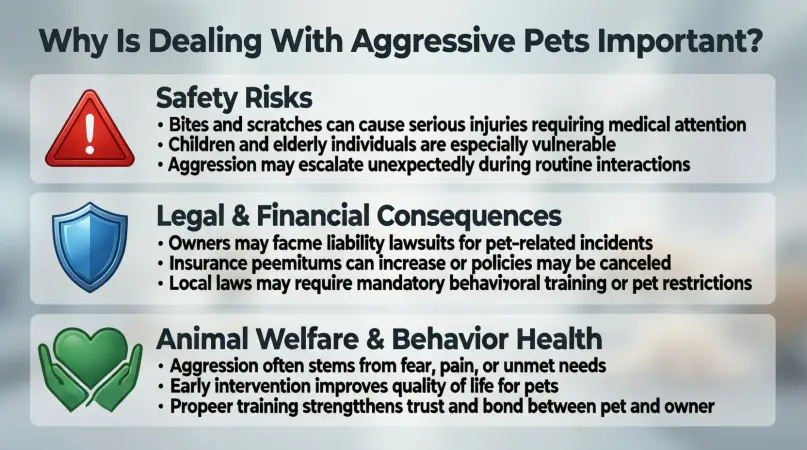
Dealing with aggressive pets is important because untreated aggression can lead to serious consequences. Injuries to family members, visitors, or other animals are real risks. Even minor incidents can damage trust and create fear in the home.
Aggression can also affect the pet’s quality of life. An anxious or fearful pet is not a happy pet. Constant stress can lead to health problems and further behavioral issues. In severe cases, pets may be abandoned or rehomed because owners feel overwhelmed.
Addressing aggression early helps prevent escalation. It allows owners to build a stronger bond with their pets based on understanding and trust. It also creates a safer environment for everyone involved.
From a legal and social point of view, aggressive incidents can cause serious trouble. Responsible ownership includes managing behavior and seeking help when needed. This makes dealing with aggressive pets not just helpful, but necessary.
Detailed Step-by-Step Guide
Step 1: Identify the Type of Aggression
Start by observing your pet carefully. Note when and where the aggression happens.
Common types include:
- Fear-based aggression
- Territorial aggression
- Resource guarding
- Pain-related aggression
- Redirected aggression
Understanding the type helps you choose the right response.
Step 2: Rule Out Medical Issues
Pain or illness often causes sudden aggression. A pet that is hurting may react defensively.
Schedule a veterinary checkup to rule out:
- Injuries
- Dental pain
- Hormonal issues
- Neurological problems
Medical treatment can sometimes solve the issue quickly.
Step 3: Ensure Immediate Safety
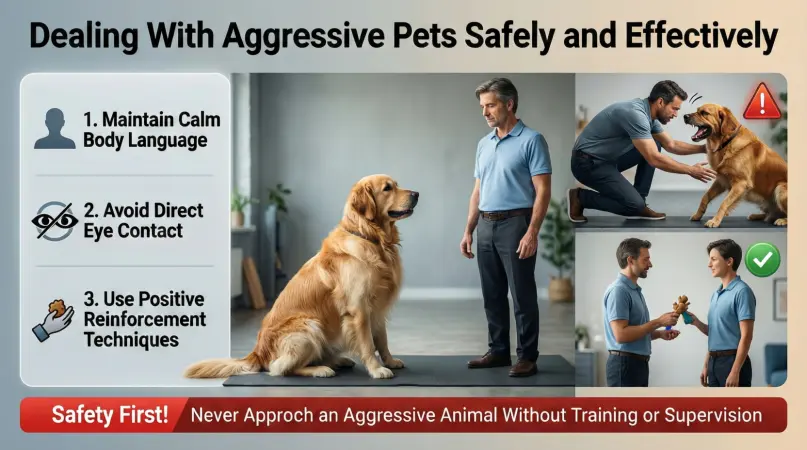
Safety always comes first when dealing with aggressive pets.
Important safety steps include:
- Avoid physical punishment
- Use barriers if needed
- Keep children supervised
- Do not force interaction
These steps prevent accidents while you work on behavior change.
Step 4: Learn Your Pet’s Warning Signs
Most pets give signals before becoming aggressive.
Watch for signs such as:
- Stiff body posture
- Ears pinned back
- Growling or hissing
- Avoiding eye contact
Respect these warnings and give space when needed.
Step 5: Use Positive Reinforcement
Reward calm and relaxed behavior consistently.
Examples include:
- Treats for calm reactions
- Praise for relaxed body language
- Toys for appropriate play behavior
Positive reinforcement builds trust and reduces fear.
Step 6: Manage the Environment
Control triggers that cause aggression.
Helpful actions include:
- Reducing loud noises
- Limiting exposure to stressors
- Creating safe spaces
A calm environment supports better behavior.
Step 7: Gradual Desensitization
Slowly expose your pet to triggers at a safe distance.
Increase exposure only when your pet remains calm. This process takes time but produces lasting results.
Step 8: Set Clear and Consistent Rules
Consistency helps pets feel secure.
Ensure all family members:
- Follow the same rules
- Use the same commands
- Respond calmly
Mixed signals can worsen aggression.
Step 9: Seek Professional Help When Needed
Some cases require expert support.
Professionals can:
- Create customized plans
- Identify hidden triggers
- Guide safe training techniques
Early help often leads to better outcomes.
Benefits of Dealing With Aggressive Pets
- Improved safety for people and animals
- Stronger bond between pet and owner
- Reduced stress and anxiety for the pet
- Better social behavior in public settings
- Increased confidence in handling your pet
- Lower risk of surrender or rehoming
Disadvantages / Risks
- Requires time and patience
- Progress may be slow
- Professional help can be costly
- Mistakes can increase aggression
- Emotional stress for owners
Common Mistakes to Avoid
Many owners unintentionally worsen aggression by reacting incorrectly.
Common mistakes include:
- Using punishment or yelling
- Ignoring early warning signs
- Expecting quick fixes
- Inconsistent training methods
- Forcing interaction
Avoiding these mistakes makes dealing with aggressive pets more effective and humane.
FAQs
Why is my pet suddenly aggressive?
Sudden aggression is often linked to pain, fear, or changes in the environment. A veterinary check is the best first step.
Can aggressive pets be trained?
Yes, many aggressive behaviors can improve with proper training, consistency, and patience.
Is aggression a sign of a bad pet?
No, aggression is a behavior, not a personality. It usually has an underlying cause.
Should I punish aggressive behavior?
Punishment often increases fear and aggression. Positive methods are safer and more effective.
How long does behavior improvement take?
Every pet is different. Some improve in weeks, while others need months of consistent work.
When should I seek professional help?
If aggression involves biting, frequent attacks, or fear for safety, professional help is strongly recommended.
Expert Tips & Bonus Points
- Stay calm during aggressive episodes
- Keep training sessions short and positive
- Track progress in a behavior journal
- Focus on prevention, not correction
- Celebrate small improvements
Experts agree that patience and empathy are key when dealing with aggressive pets.
Conclusion
Dealing with aggressive pets is a challenging but manageable responsibility. Aggression does not mean your pet is broken or dangerous by nature. In most cases, it is a response to fear, pain, or misunderstanding. When owners take the time to learn the causes and apply safe, positive methods, real improvement is possible.
The journey requires patience, consistency, and compassion. Small changes in how you respond can lead to big changes in your pet’s behavior. Safety should always come first, followed by careful observation and positive reinforcement. Avoid quick fixes and focus on long-term trust building.
