

Introduction
A healthy diet for pets is one of the most important responsibilities of any pet owner. Just like humans, pets need the right balance of nutrients to stay active, happy, and free from illness. Many beginners believe that feeding pets is simple, but choosing the right food requires knowledge, care, and consistency. Poor feeding habits can slowly lead to obesity, weak immunity, digestive problems, and long-term health issues.
In today’s busy lifestyle, many pet owners rely on packaged food without understanding labels or ingredients. Others share human food without knowing the risks involved. This is why learning about a healthy diet for pets is essential for both new and experienced pet parents. When pets receive proper nutrition, they show better energy levels, shinier coats, stronger bones, and improved behavior.
Moreover, a balanced diet helps prevent common diseases and reduces expensive vet visits. It also supports pets at every life stage, from playful puppies to aging companions. A healthy diet for pets is not about expensive food. It is about choosing safe, balanced, and suitable meals based on species, size, age, and activity level.
This guide is designed to help beginners and intermediate readers understand pet nutrition in a simple and practical way. By the end, you will feel confident about feeding your pet correctly and making smarter food choices every day.
What Is a Healthy Diet for Pets?
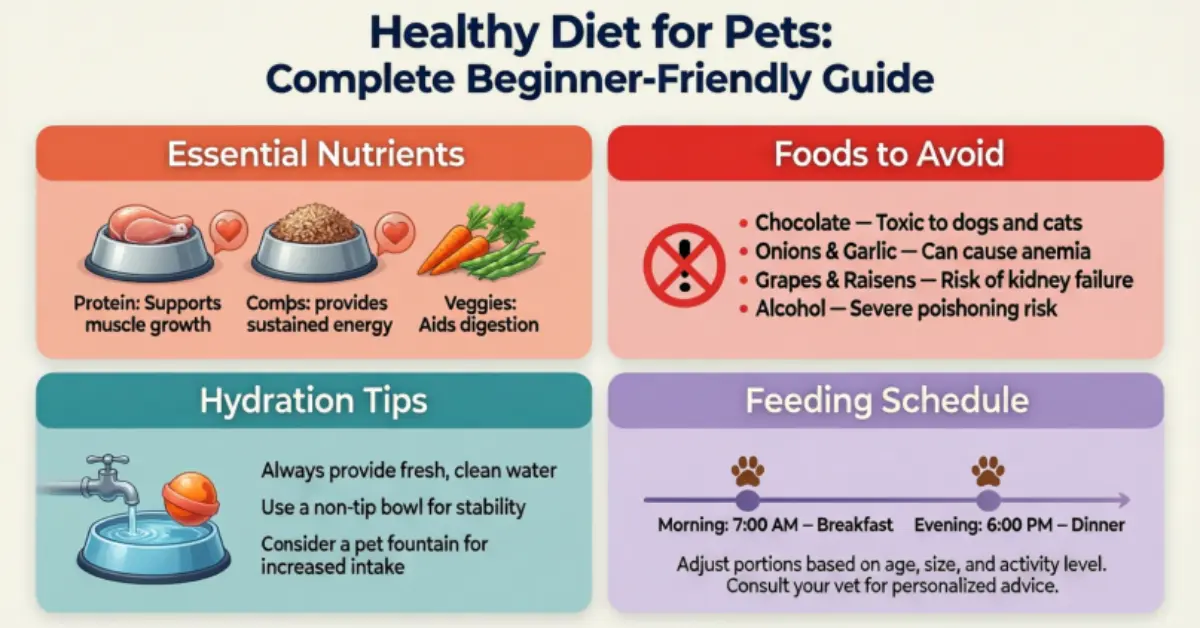
A healthy diet for pets means providing food that meets all their nutritional needs without causing harm. Pets need a balanced mix of proteins, carbohydrates, fats, vitamins, minerals, and water. Each nutrient plays a specific role in keeping the body strong and functional.
Unlike humans, pets cannot choose what to eat. They depend entirely on their owners. This makes it even more important to understand what goes into their bowls. A healthy diet for pets supports growth, repairs tissues, boosts immunity, and provides energy for daily activities.
Different pets have different dietary needs. Dogs, cats, birds, and rabbits all require specific nutrients. Even within the same species, age, breed, and health conditions affect diet choices. For example, kittens need more protein, while senior dogs benefit from lighter meals.
Why Is a Healthy Diet for Pets Important?
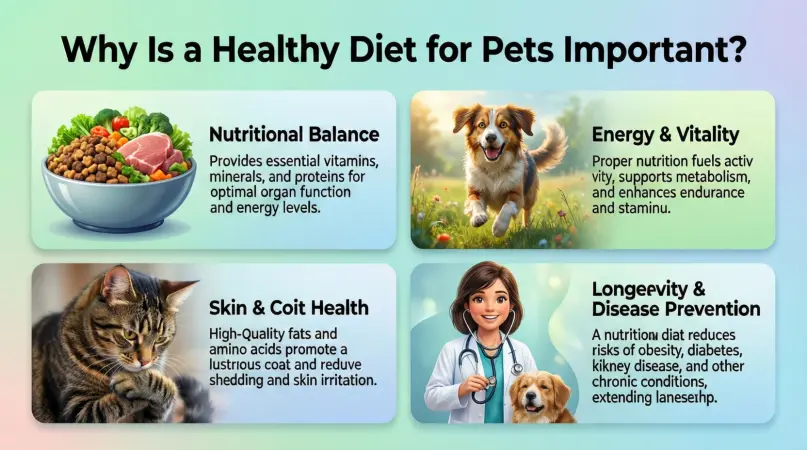
A healthy diet for pets directly affects their quality of life. Nutrition influences physical strength, mental sharpness, and emotional well-being. Pets that eat balanced meals are more active and less prone to illness.
Proper nutrition helps maintain a healthy weight. Obesity is a growing problem in pets and often leads to joint pain, diabetes, and heart issues. A healthy diet for pets helps control weight naturally without strict restrictions.
Good food also strengthens the immune system. Pets with strong immunity recover faster from illness and resist infections better. Their skin stays healthy, coats remain shiny, and digestion improves.
Behavior is another important factor. Pets that lack nutrients may show aggression, anxiety, or lethargy. A healthy diet for pets supports stable energy levels and calmer behavior.
Detailed Step-by-Step Guide
Step 1: Understand Your Pet’s Nutritional Needs
Every pet has unique needs based on species, age, size, and activity level. Dogs are omnivores, while cats are obligate carnivores. This means cats need animal protein to survive.
Young pets need more calories and nutrients for growth. Adult pets need maintenance diets, while senior pets require fewer calories but more joint support. A healthy diet for pets starts with understanding these basics.
Step 2: Choose High-Quality Food
Always read ingredient labels carefully. Look for real protein sources like chicken, fish, or lamb. Avoid foods with excessive artificial colors, flavors, or preservatives.
A healthy diet for pets should contain natural ingredients and minimal fillers. Quality food improves digestion and nutrient absorption. It also reduces allergies and stomach issues.
Step 3: Balance Homemade and Commercial Diets
Some owners prefer homemade meals, while others rely on commercial pet food. Both options can work if balanced properly. Homemade meals must include proteins, vegetables, and supplements.
Commercial food should meet nutritional standards. Mixing both can provide variety. However, sudden changes should be avoided. A healthy diet for pets requires consistency.
Step 4: Control Portion Sizes
Overfeeding is a common mistake. Even healthy food can cause weight gain if portions are too large. Measure meals based on pet size and activity.
Feeding schedules help regulate digestion. Most pets do well with two meals per day. Portion control is a key part of a healthy diet for pets.
Step 5: Provide Fresh Water Always
Water is often overlooked but is vital. Dehydration can cause serious health problems. Clean, fresh water should be available at all times.
Wet food can help with hydration, especially for cats. A healthy diet for pets always includes proper water intake.
Step 6: Monitor Health and Adjust Diet
Observe your pet’s weight, energy, and stool quality. Changes may signal dietary issues. Adjust food types or portions as needed.
Regular vet checkups help fine-tune nutrition. A healthy diet for pets evolves with time and health conditions.
Benefits of a Healthy Diet for Pets
- Improves overall energy and activity levels
- Supports strong immunity and disease resistance
- Maintains healthy weight and muscle mass
- Enhances coat shine and skin health
- Promotes better digestion and gut health
- Reduces risk of chronic diseases
- Improves behavior and mood stability
- Extends lifespan and quality of life
Disadvantages / Risks
- Poor planning can cause nutrient imbalance
- Overfeeding leads to obesity and joint issues
- Low-quality food may cause allergies
- Sudden diet changes can upset digestion
- Homemade diets without guidance may lack nutrients
- Excess treats reduce nutritional balance
Common Mistakes to Avoid
Many pet owners unknowingly make feeding mistakes. One common error is feeding table scraps. Human food often contains salt, sugar, or spices that harm pets.
Another mistake is ignoring portion sizes. Free feeding leads to overeating. A healthy diet for pets requires measured portions.
Switching food too quickly is also harmful. Gradual transitions prevent stomach upset. Lastly, ignoring water intake can cause dehydration.
Avoid relying on treats as main food. Treats should only be rewards. Understanding these mistakes helps maintain a healthy diet for pets long-term.
FAQs
What foods are best for a healthy diet for pets?
High-quality commercial food or balanced homemade meals work best. The key is proper nutrition, fresh ingredients, and correct portions.
Can pets eat human food safely?
Some human foods are safe, like plain chicken or carrots. However, many foods are toxic. Always check before sharing.
How often should I feed my pet?
Most adult pets need two meals daily. Puppies and kittens may need three to four smaller meals.
Is dry food or wet food better?
Both have benefits. Dry food supports dental health, while wet food improves hydration. A mix often works well.
How do I know if my pet’s diet is healthy?
Healthy pets have steady energy, shiny coats, normal stools, and stable weight. Regular checkups confirm diet quality.
Should senior pets have special diets?
Yes. Senior pets benefit from lower calories and added joint support. A healthy diet for pets changes with age.
Expert Tips & Bonus Points
Rotate protein sources to avoid allergies. Store food properly to maintain freshness. Use measuring cups for accuracy.
Introduce new foods slowly over seven days. Observe reactions closely. Treats should not exceed ten percent of daily intake.
Consult a vet before major diet changes. Supplements should only be added if necessary. A healthy diet for pets is simple when planned well.
Conclusion
A healthy diet for pets is the foundation of long, happy, and active lives. Feeding pets correctly is not about following trends or buying expensive food. It is about understanding their needs and making thoughtful choices every day. Proper nutrition supports physical strength, mental alertness, and emotional balance.
When pets receive balanced meals, they show better behavior, stronger immunity, and improved overall health. A healthy diet for pets also reduces the risk of chronic illness and helps manage weight naturally. This leads to fewer vet visits and lower long-term costs.
Pet owners should focus on quality ingredients, correct portions, and consistency. Monitoring changes in weight, energy, and digestion helps adjust diets effectively. Simple habits like fresh water access and scheduled feeding make a big difference.
