


Introduction
Pets are more than animals. They are family members who share our homes, routines, and emotions. When they feel unwell, we naturally want to help them as quickly and safely as possible. Many pet owners look for gentle and affordable solutions before rushing to the vet. This is where home remedies for pets can play a helpful role.
Home remedies for pets focus on natural care methods using simple household ingredients. These remedies are often used for minor problems such as mild skin irritation, upset stomach, small wounds, or stress. They do not replace professional veterinary care, but they can support everyday pet health when used correctly.
For beginners and intermediate pet owners, understanding safe home remedies for pets builds confidence and awareness. It also helps reduce unnecessary medication for small issues. However, knowing what is safe and what is risky is very important. Pets have sensitive systems, and not every human remedy works for animals.
In this article, you will learn what home remedies for pets are, why they matter, and how to use them safely. You will also discover step-by-step guidance, benefits, risks, common mistakes, and expert advice. The goal is to help you care for your pet in a natural, calm, and informed way while keeping their safety first.
What Is Home Remedies for Pets?
Home remedies for pets are natural or household-based treatments used to manage minor health issues in animals. These remedies usually involve common items such as herbs, oils, foods, or simple care techniques. They are often used for short-term relief and daily wellness support.
These remedies may include soothing a dog’s itchy skin with oatmeal baths or helping a cat’s digestion with plain pumpkin. Many pet owners prefer these methods because they are affordable, gentle, and easy to apply at home.
Home remedies for pets are not meant to cure serious illnesses. Instead, they work best for mild conditions and preventive care. For example, they can help reduce stress, improve coat health, or support digestion.
It is important to understand that pets are different from humans. Their bodies react differently to foods and substances. This is why learning correct methods and safe quantities is essential when using home remedies for pets.
Why Is Home Remedies for Pets Important?
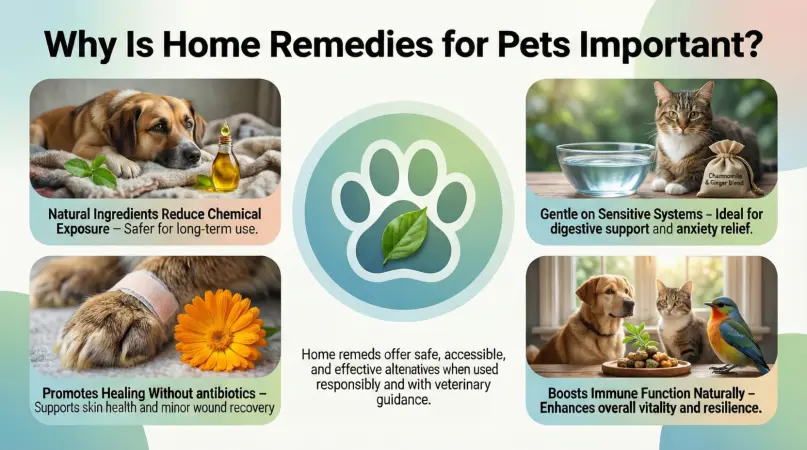
Home remedies for pets are important because they offer a natural approach to everyday pet care. They encourage pet owners to observe their pets closely and respond quickly to small changes in behavior or health.
These remedies can reduce dependence on medications for minor issues. For pets with sensitive stomachs or allergies, gentle remedies may be easier to tolerate. They also help create a calm environment, which supports emotional well-being.
Another key reason is accessibility. Not every situation requires an immediate vet visit. Home remedies for pets allow owners to provide comfort while monitoring symptoms. This approach saves time and reduces stress for both pets and owners.
Most importantly, learning about home remedies for pets increases responsible pet ownership. It teaches when home care is enough and when professional help is necessary.
Detailed Step-by-Step Guide
Step 1: Observe Your Pet Carefully
Before using any home remedies for pets, watch your pet closely. Notice changes in eating, sleeping, movement, or behavior. Small details help you choose the right remedy.
Check for visible signs such as redness, swelling, or mild wounds. Make sure the issue is minor and not urgent.
Step 2: Choose Safe and Pet-Friendly Ingredients
Always use ingredients known to be safe for pets. Avoid items that are toxic to animals, such as onions, garlic, chocolate, and essential oils not approved for pets.
Common safe options include:
- Plain oatmeal
- Coconut oil
- Aloe vera gel
- Plain yogurt
- Pumpkin puree
Step 3: Prepare the Remedy Properly
Cleanliness matters. Wash your hands and prepare remedies in clean containers. Use simple preparations without mixing many ingredients.
For example, grind oatmeal into a fine powder before using it for a bath. Use pure aloe vera without added chemicals.
Step 4: Apply in Small Amounts
When using home remedies for pets, start with small amounts. Observe how your pet reacts before continuing. This reduces the risk of allergies or discomfort.
For topical remedies, apply to a small area first. For food-based remedies, introduce slowly.
Step 5: Monitor Results Closely
After applying the remedy, monitor your pet for changes. Improvement should be gentle and gradual. If symptoms worsen or do not improve, stop the remedy.
Home remedies for pets should never cause pain or distress. Comfort and safety are the priority.
Step 6: Know When to Stop
If symptoms last more than two days or worsen, consult a veterinarian. Home remedies for pets are supportive, not a replacement for medical care.
Benefits of Home Remedies for Pets
- Natural and gentle on the body
- Cost-effective and easy to access
- Reduce stress for pets and owners
- Support daily wellness and comfort
- Encourage mindful and responsible care
- Useful for minor and non-emergency issues
Disadvantages / Risks
- Not suitable for serious conditions
- Risk of incorrect dosage
- Some ingredients may cause allergies
- Delayed professional treatment can be harmful
- Lack of proper knowledge may lead to mistakes
Common Mistakes to Avoid
One common mistake is assuming all natural remedies are safe. Some plants and foods are harmful to pets. Always research before use.
Another mistake is using human medications or essential oils without guidance. Pets process substances differently.
Overusing home remedies for pets is also risky. Even safe remedies can cause problems if used too often.
Ignoring warning signs is dangerous. If your pet shows pain, fever, vomiting, or weakness, seek professional care immediately.
FAQs
Are home remedies for pets always safe?
Home remedies for pets are safe only when used correctly and for minor issues. Always confirm ingredient safety and proper use.
Can home remedies replace vet visits?
No. Home remedies for pets support minor care but do not replace professional veterinary treatment.
How quickly do home remedies work?
Results vary. Some remedies show improvement within hours, while others take a day or two.
Can I use the same remedies for cats and dogs?
Not always. Cats are more sensitive. Always check species-specific safety.
What should I do if my pet reacts badly?
Stop the remedy immediately and consult a veterinarian if symptoms persist.
Are home remedies suitable for puppies and kittens?
Extra caution is needed. Young pets have delicate systems, so consult a vet first.
Expert Tips & Bonus Points
Always keep a basic pet care kit at home with safe ingredients. Maintain a simple record of remedies used and results observed.
Focus on prevention through good nutrition, clean water, regular grooming, and exercise. Healthy pets need fewer remedies.
Build a relationship with a trusted veterinarian. Discuss safe home remedies for pets during routine checkups.
Conclusion
Home remedies for pets offer a gentle and thoughtful way to support your pet’s everyday health. They help address minor discomforts, promote comfort, and strengthen the bond between you and your animal companion. When used responsibly, these remedies can be a valuable part of routine pet care.
Understanding the limits of home remedies for pets is essential. They are not miracle cures and should never delay professional treatment. Observation, moderation, and safety are the foundations of effective home care.
By learning safe techniques, choosing pet-friendly ingredients, and knowing when to seek help, you create a balanced approach to pet wellness. This approach combines natural care with professional guidance.
