

Introduction
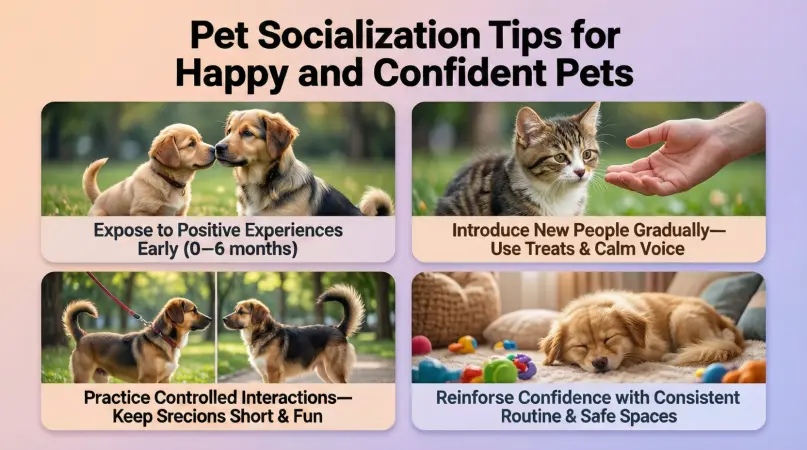
Pet socialization tips are essential for every pet owner who wants a calm, confident, and friendly companion. Whether you have a playful puppy, a curious kitten, or an adult pet with limited experience, socialization plays a key role in shaping behavior. It is not just about meeting other animals. It is about helping pets feel safe, relaxed, and comfortable in the world around them.
Many beginners believe socialization happens naturally. In reality, it requires patience, planning, and the right approach. Without proper guidance, pets may develop fear, anxiety, or aggression. That is why learning pet socialization tips early can prevent long-term behavior problems and stress for both pets and owners.
In simple terms, socialization means gently introducing pets to new people, animals, places, sounds, and experiences. When done correctly, it builds trust and confidence. Pets learn that new situations are not dangerous, which helps them respond calmly instead of reacting with fear.
This guide is written in simple English for beginners and intermediate readers. It explains pet socialization tips step by step, using clear examples and practical advice. You will learn why socialization matters, how to do it safely, and what mistakes to avoid. By the end, you will have the knowledge to raise a well-balanced pet that enjoys life and adapts easily to change.
What Is Pet Socialization?
Pet socialization is the process of helping animals become comfortable with different experiences. It includes meeting new people, interacting with other pets, and exploring new environments. The goal is to create positive experiences that reduce fear and build confidence.
Socialization usually starts at a young age, but it is never too late. Puppies and kittens learn faster, yet adult pets can also benefit from proper exposure. The key is to move slowly and respect the pet’s comfort level.
Pet socialization tips focus on positive exposure. This means allowing pets to observe, explore, and interact without pressure. Rewards like praise or treats help them associate new experiences with good feelings.
Socialization is not training, although both work together. Training teaches commands, while socialization shapes emotional responses. When combined, they create polite, relaxed, and well-behaved pets.
Why Is Pet Socialization Important?
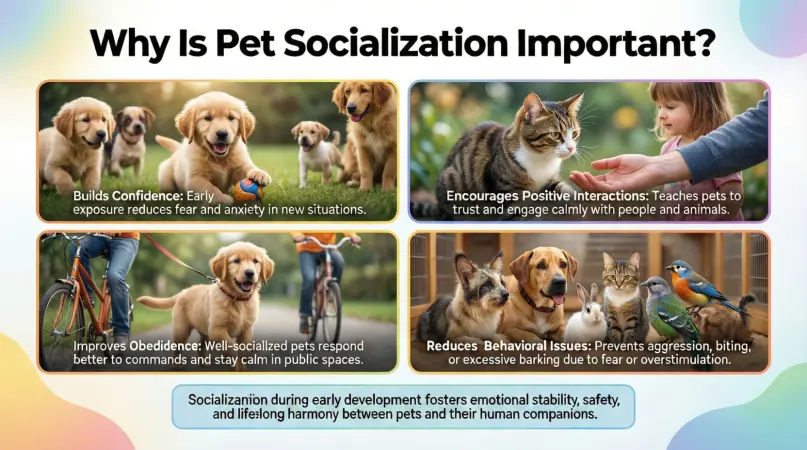
Pet socialization tips matter because socialized pets are easier to manage and happier overall. A well-socialized pet feels safe in different situations and reacts calmly instead of panicking.
Proper socialization helps prevent behavior problems such as biting, excessive barking, hiding, or aggression. Pets that lack exposure may see normal situations as threats. This can lead to stress and fear-based reactions.
Socialization also improves safety. Calm pets are less likely to lash out when startled. This protects family members, visitors, and other animals.
In addition, socialized pets enjoy a better quality of life. They can travel, visit the vet, and meet guests without distress. For owners, this means fewer worries and a stronger bond built on trust and understanding.
Detailed Step-by-Step Guide
Step 1: Start at the Right Time
The best time to begin socialization is early, ideally during puppyhood or kittenhood. Young pets are naturally curious and open to new experiences.
However, adult pets can still learn. The process may take longer, but patience makes a big difference. Always consider your pet’s age, health, and personality.
Step 2: Create a Calm Environment
Choose quiet and controlled settings for first experiences. Avoid crowded or noisy places at the beginning. A calm space helps pets focus and feel safe.
At home, introduce new sounds or objects slowly. For example, let your pet hear a vacuum from another room before moving it closer.
Step 3: Introduce New People Gradually
Allow pets to meet different people one at a time. Ask visitors to remain calm and avoid sudden movements. Let the pet approach on its own.
Use treats and gentle praise when the pet shows curiosity or calm behavior. This positive reinforcement builds confidence.
Step 4: Socialize with Other Pets Safely
When introducing pets to other animals, start with short and supervised interactions. Choose friendly and well-behaved animals for first meetings.
Keep dogs on leashes and allow them to sniff briefly. For cats, use visual contact first, then short face-to-face meetings.
Step 5: Explore New Places Slowly
New environments can be overwhelming. Start with quiet walks or short trips. Gradually increase exposure to parks, streets, or pet-friendly locations.
Let pets observe their surroundings without forcing interaction. Reward calm behavior to reinforce positive feelings.
Step 6: Use Positive Reinforcement
Pet socialization tips always emphasize rewards. Treats, praise, and affection encourage pets to repeat calm behavior.
Avoid punishment during socialization. Fear or stress can undo progress and damage trust.
Step 7: Watch Body Language
Learn to read your pet’s signals. Signs of stress include trembling, hiding, growling, or excessive panting. If noticed, step back and slow down.
Respecting boundaries builds trust and prevents negative experiences.
Step 8: Be Consistent
Short and frequent sessions work better than long ones. Consistency helps pets understand that new experiences are normal and safe.
Keep practicing pet socialization tips regularly to maintain progress.
Benefits of Pet Socialization Tips
- Builds confidence and emotional stability
- Reduces fear, anxiety, and aggression
- Improves behavior in public places
- Makes vet visits and travel easier
- Strengthens the bond between pet and owner
- Encourages positive interaction with people and animals
Disadvantages / Risks
- Poor timing can overwhelm sensitive pets
- Forced interactions may increase fear
- Exposure to unhealthy animals can risk illness
- Inconsistent practice slows progress
Common Mistakes to Avoid
Many owners rush the process. Moving too fast can create fear instead of confidence. Always follow your pet’s pace.
Another mistake is forcing interaction. Socialization should be voluntary, not stressful.
Ignoring body language is also risky. Stress signals should never be overlooked.
Lastly, stopping socialization too early can undo progress. Pets need continued exposure throughout life.
FAQs
What age is best for pet socialization?
Early weeks are ideal, but socialization can begin at any age with patience.
Can older pets be socialized?
Yes, adult pets can learn through slow and positive exposure.
How long does socialization take?
It varies. Some pets adjust in weeks, others need months.
Are treats necessary?
Treats help reinforce positive experiences, especially for beginners.
Can socialization stop bad behavior?
It can prevent many issues, but severe problems may need professional help.
How often should I practice socialization?
Short sessions several times a week work best.
Expert Tips & Bonus Points
Keep sessions short and positive. End on a good note to build confidence.
Expose pets to different surfaces, sounds, and smells at home.
Enroll in group classes for guided socialization.
Stay calm, as pets sense owner emotions easily.
Remember that pet socialization tips work best when combined with love, patience, and consistency.
Conclusion
Pet socialization tips are not just training advice. They are a foundation for a happy and balanced life. Socialization helps pets understand the world and respond calmly to new experiences. It reduces fear, builds confidence, and strengthens the bond between pets and their owners.
For beginners, the process may seem challenging at first. However, by starting slowly and using positive reinforcement, progress becomes visible. Every small success builds trust and comfort. Intermediate owners can refine techniques and introduce more complex situations over time.
