

Introduction
Traveling with pets can be a joyful experience, but it requires careful planning to ensure their safety and comfort. Many pet owners underestimate the challenges that come with taking pets on trips, whether by car, plane, or train. From securing them during transit to managing stress and health issues, travel safety for pets is essential for a smooth journey.
Proper preparation not only protects your pet but also prevents stressful situations for yourself. Even routine trips can become risky if the right precautions are not taken. Whether you are moving across the country, going on vacation, or visiting family, understanding the basics of travel safety for pets will give you peace of mind.
This guide will explain what travel safety for pets means, why it is important, and provide a detailed, step-by-step approach for keeping your furry companions safe during any journey. You will also find tips to avoid common mistakes, understand potential risks, and learn expert insights to make travel enjoyable for both you and your pet.
By following this guide, pet owners can make informed decisions, reduce anxiety, and ensure their pets are safe, healthy, and happy during travel. Whether you are a beginner or have some experience traveling with pets, these practical strategies will make your next trip more enjoyable and stress-free.
What is Travel Safety for Pets?
Travel safety for pets refers to the practices and precautions taken to protect animals during transportation. It involves preparing your pet physically, mentally, and logistically before and during a trip. Travel safety includes ensuring your pet’s health, preventing accidents, minimizing stress, and complying with travel regulations.
Safe travel for pets can include:
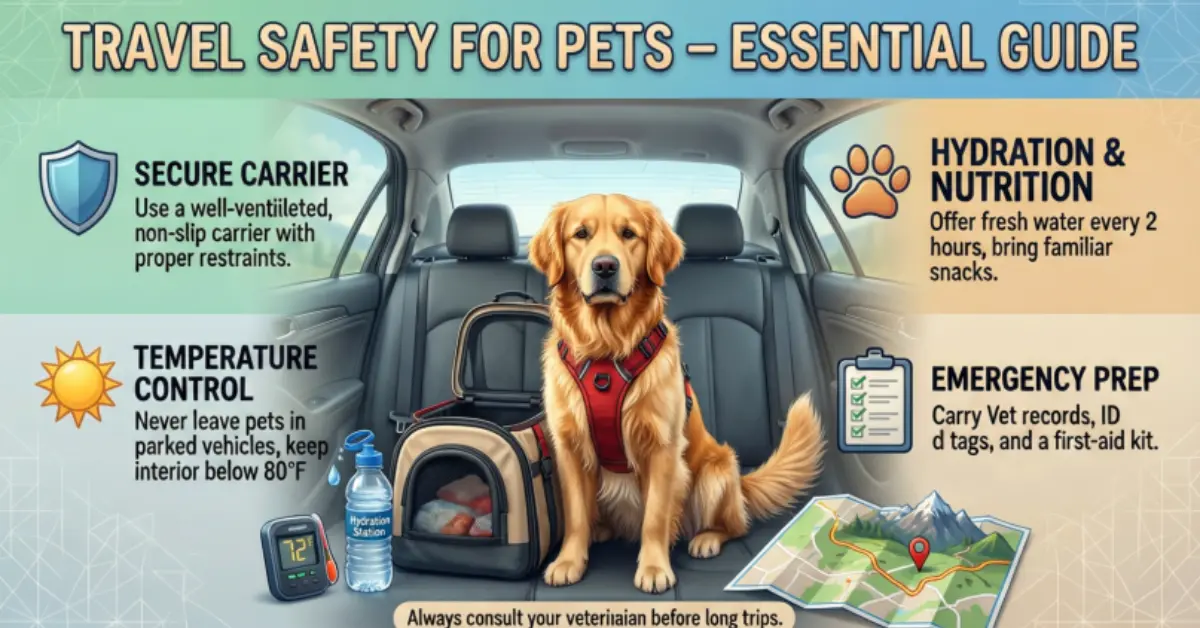
- Using secure carriers or seat belts during car travel
- Following airline regulations for pet travel
- Providing proper hydration and nutrition
- Planning rest breaks for long journeys
- Monitoring pets for signs of stress or illness
It’s not just about physical safety—mental comfort is equally important. Travel safety encompasses strategies that help pets feel secure and calm in new environments, reducing the risk of panic or escape.
In short, travel safety for pets means taking every necessary step to protect them while moving from one place to another, ensuring their well-being and your peace of mind.
Why is Travel Safety for Pets Important?
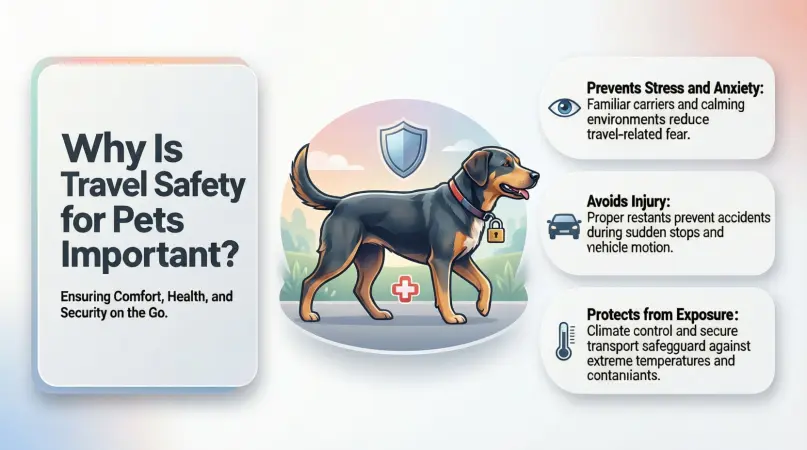
Traveling without proper safety measures can put pets at risk of injury, illness, or extreme stress. Pets are sensitive to changes in their environment, and unfamiliar surroundings can trigger anxiety. Safe travel practices prevent accidents, reduce stress, and ensure pets arrive healthy at their destination.
Here are key reasons why travel safety for pets matters:
- Health Protection – Prevents dehydration, overheating, or injury during travel.
- Accident Prevention – Proper restraints reduce the risk of crashes or falls in vehicles.
- Stress Reduction – Familiar items and routines help pets remain calm.
- Regulation Compliance – Airlines and transport services often have strict rules for pet travel.
- Peace of Mind – Knowing your pet is safe allows you to focus on your journey.
Travel safety is not just a precaution—it’s a responsibility. Neglecting safety measures can lead to serious consequences, including illness, escape, or even fatalities. By planning ahead, you can make travel a positive experience for your pet.
Detailed Step-by-Step Guide to Travel Safety for Pets
Step 1: Preparing Your Pet
- Health Check: Schedule a vet visit before any trip. Ensure vaccinations are up to date, and discuss travel-related concerns.
- Identification: Microchip your pet and update ID tags with your contact information.
- Acclimatization: If your pet is new to travel, practice short trips to get them comfortable.
Step 2: Choosing the Right Carrier or Restraint
- Carriers: Choose a sturdy carrier that is well-ventilated and sized appropriately. Your pet should be able to stand, turn, and lie down comfortably.
- Seat Belts/Harnesses: For dogs, a crash-tested seat belt harness provides additional security.
- Airline Crates: Airlines require specific crate dimensions. Check guidelines before booking.
Step 3: Planning the Journey
- Route Planning: Identify rest stops for water, bathroom breaks, and exercise.
- Travel Time: Avoid traveling during extreme temperatures; early morning or evening is preferable.
- Emergency Preparedness: Keep a first-aid kit, vet contacts, and a travel plan for emergencies.
Step 4: Packing Essentials
Include:
- Food and water
- Bowls (collapsible for convenience)
- Medications
- Comfort items like blankets or toys
- Waste bags or litter supplies
Step 5: Maintaining Comfort During Travel
- Keep the temperature comfortable.
- Avoid feeding your pet right before travel to prevent motion sickness.
- Speak softly and calmly to reduce anxiety.
- Cover carriers partially if your pet is nervous around new sights.
Step 6: Air Travel Tips
- Book direct flights to reduce travel time.
- Confirm pet policies with the airline.
- Avoid sedatives unless prescribed by a vet—they can be risky at high altitudes.
- Label the crate with your contact details and “Live Animal” stickers.
Step 7: Arrival and Settling In
- Allow your pet to explore the new environment gradually.
- Keep routines consistent for meals, walks, and rest.
- Observe for signs of stress or illness, such as excessive panting, vomiting, or lethargy.
Benefits of Travel Safety for Pets
- Ensures physical safety during travel
- Reduces stress and anxiety for pets
- Prevents health issues like dehydration or overheating
- Minimizes risk of accidents or escapes
- Makes travel more enjoyable for both pet and owner
- Builds pet confidence with travel over time
- Helps maintain routine and comfort in new environments
Disadvantages / Risks
- Extra preparation and planning time
- Possible travel restrictions for certain pets
- Cost of carriers, seat belts, and vet checkups
- Stress for pets unaccustomed to travel
- Risk of motion sickness or injury if precautions are ignored
- Airline restrictions or last-minute cancellations
- Exposure to unfamiliar environments or animals, increasing infection risk
Common Mistakes to Avoid
- Skipping Vet Checks – Travel without a health check can lead to emergencies.
- Using the Wrong Carrier – Too small or insecure carriers increase injury risk.
- Overfeeding Before Travel – Leads to motion sickness.
- Ignoring Airline Policies – Non-compliance can prevent your pet from traveling.
- Neglecting Identification – Losing your pet without ID can have serious consequences.
- Not Planning Rest Stops – Long journeys without breaks cause stress and discomfort.
- Sedating Pets Unnecessarily – Can increase health risks during travel.
FAQs About Travel Safety for Pets
1. Can I give my pet food before traveling?
It’s best to feed them at least 2–3 hours before the trip to prevent motion sickness. Small snacks are acceptable for long journeys.
2. How can I keep my pet calm during travel?
Use familiar toys, blankets, and calming sprays. Short practice trips also help acclimate them.
3. Are sedatives safe for pets during travel?
Only if prescribed by a vet. Sedatives can affect breathing and stress responses, especially in cats and small dogs.
4. How do I choose the right carrier?
Ensure it is well-ventilated, sturdy, airline-approved if flying, and large enough for your pet to stand, turn, and lie down comfortably.
5. What if my pet gets car sick?
Consult a vet for motion sickness medications or natural remedies. Frequent breaks, fresh air, and small meals can help.
6. Can I travel with my pet internationally?
Yes, but you must follow country-specific regulations, including vaccinations, quarantine rules, and documentation.
7. How do I handle emergency situations?
Keep a first-aid kit, vet contact list, and know the nearest animal hospitals along your route.
8. Are certain pets more suited to travel?
Dogs and cats can travel safely, but exotic pets may require special arrangements. Research species-specific needs before traveling.
Expert Tips & Bonus Points
- Use calming pheromone sprays for anxious pets.
- Train pets to enter carriers voluntarily to reduce stress.
- Maintain a consistent routine, even while traveling.
- Keep fresh water accessible at all times.
- Use GPS collars for pets prone to escaping.
- Avoid leaving pets in cars, especially in extreme temperatures.
- Document travel details and pet information for emergencies.
- Practice short trips before long journeys to gauge your pet’s comfort.
Conclusion
Travel safety for pets is more than a precaution—it’s a commitment to their health, comfort, and happiness. By preparing your pet, choosing the right equipment, and following best practices, you can reduce stress and prevent accidents during any journey.
Whether traveling by car, plane, or train, advance planning ensures a smooth and enjoyable experience for both you and your pet. Avoiding common mistakes, monitoring your pet’s health, and following expert tips can turn a potentially stressful trip into a safe and memorable adventure.
With careful attention to travel safety, pets can enjoy new sights, experiences, and adventures while staying healthy and secure. The key is preparation, observation, and a little patience—your pet will thank you with calm behavior, trust, and companionship throughout the journey.
